THE KEY TO THE SOIL
Whatever our diet and preferences are, we all need farmers three times per day. It is called Breakfast, Lunch and Dinner. Almost everything we eat has its beginning from someone who has tilled the land.
The emphasis is on the land, because the Earth is where all food originates from. It is either grown in the soil, comes from animals that graze the pasture that is grown in the soil, or processed from what comes from the animal. Soil is so important, and we must take care of it. We also need to be aware of its natural abilities and how we can encourage the soil to produce.
There are two basic ways to produce from the land. The first and most common one is to make the soil work for us. We do this by applying as many elements as we can afford to the soil to make sure we get an adequate result. In other words, we force the land to produce. The other method is to encourage the land to produce.
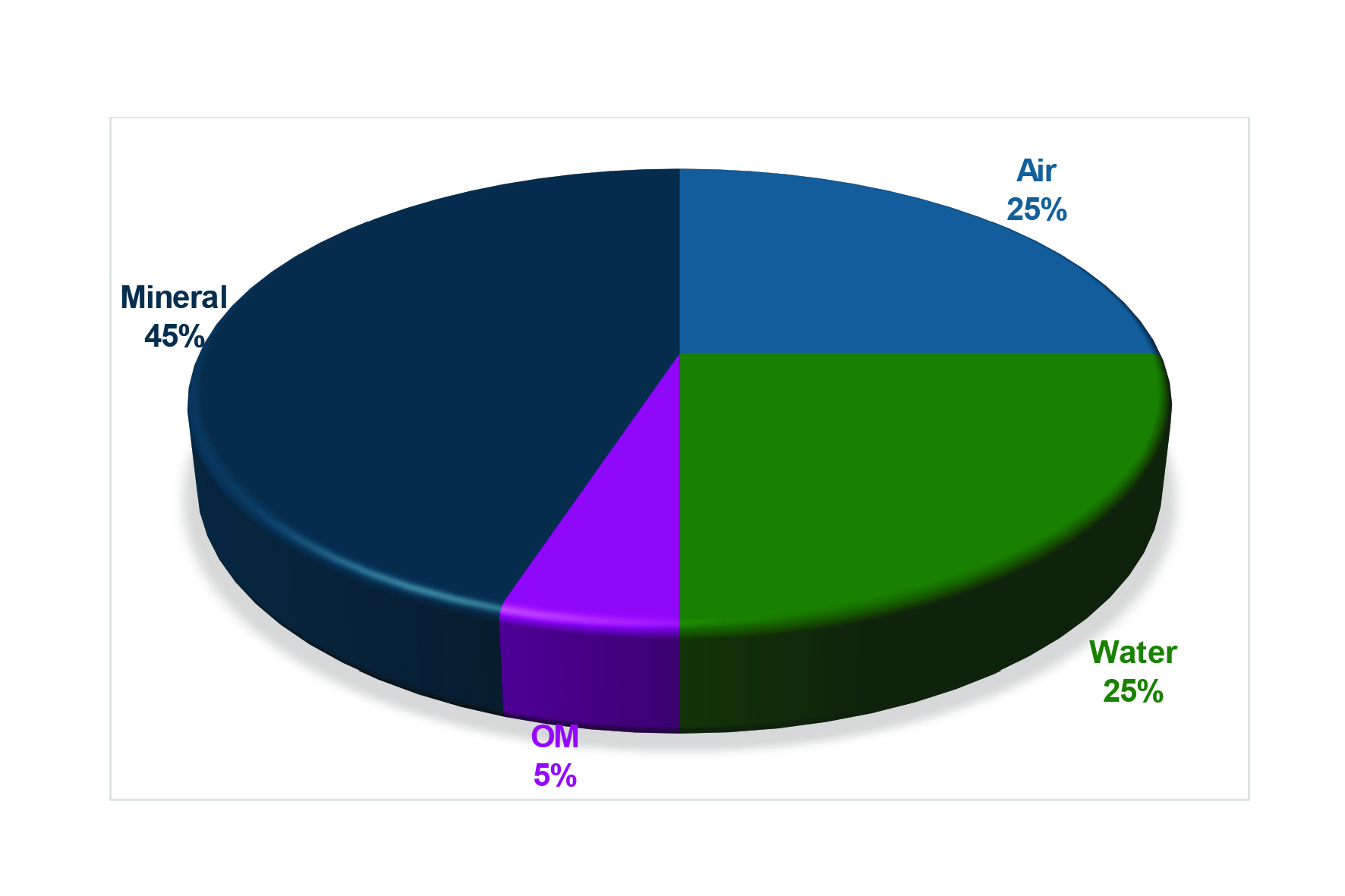
The diagram shows the basic make-up of soils regardless of where they might be in our country. The 45 percent is the parent material that makes up the soil. It could be a loam soil, a clay soil, or a mixture of many other types. The air portion of the soil is what is required for the root system of plants to breath, for water to translocate and disperse into the soil and for the soil to be friable. Water is needed to keep the plants alive; a healthy soil needs to have over 20 percent water so that a plant can have sufficient for hydration.
The fourth and smallest section of the soil is the organic matter [OM]. This section is the key to the entire soil as it regulates the amount of air and water that is in the soil. The amount of water that the soil contains is largely controlled by the amount of carbon and other material that is contained within the organic matter. Extra organic matter would mean a better water-holding capacity in the soil. What that would mean is that the soil would take in more water during a flood event which in turn causes less flood damage, and going into a drought the plants would have water for longer with less reliance on irrigation. As well as this, because organic matter is usually lighter and has quite an amount of air, the soil will have a natural source of aeration. The organic matter is also the home for microbes and fungi that inhabit the soil and as such is the heart of the soil. The microbes and fungi solubilise the fertiliser in the soil, making for better efficiency, and the capture and release of nitrogen as required by the plant. They also create a dynamic area around the root system which actively seeks out fertiliser elements and brings them into the plant as required, while storing the rest in a form that is held in reserve for future use. There are many other ways that microbes and fungi help and aid plants, not only to survive but to thrive.
What's in the 5% - Organic matter and why is matters