Feed the soil - Grow the Pasture
Using VITALIFE® is not so much about applying a fertiliser as it is changing to a biological way of farming the soil. It is a different approach. Instead of applying chemical fertiliser to stimulate grass to grow, it is about feeding the soil food web. The soil then feeds and stimulates pasture growth.
Most farms in New Zealand have issues including:
· Soils are low in active biology
· Fertiliser is doing the heavy lifting
· Pests like grass grub thrive in biologically weak soils
· Nitrogen efficiency is poor (N is lost through leaching)
This leads to increasing input costs and lower relative returns for those inputs. It also makes the system more vulnerable to pest and environmental pressures.
Let’s be clear – this is not anti-input, anti-fertiliser nor anti-chemistry! We still need them and we strongly recommend the continued use of fertiliser.
It is a change of approach to one that is pro-soil, pro-farmer and pro-future farming.
What VITALIFE® does in the soil
VITALIFE® Calcium contains lime (calcium) to help balance pH (ideally this should be about 6.5). It also contains a carbon source to carry and help feed microbes (bacteria and fungi). These microbes turn the carbon into humus which glues soil together to help create better soil structure. It also helps form humus, which increase both water and nutrient holding capacity in the soil.
Some of the bacteria and fungi species included in VITALIFE® are Serratia, Trichoderma, Beauveria, Verticillium, Bacillus, Phanerochaete and Metarhizium. These organisms perform a range of functions which include:
· release compounds that stimulate root and leaf growth
· release compounds that trigger the plants natural defences
· release compounds that inhibit soil pathogens and insects
· directly attack and parasitise insects, eating them from the inside out
· release enzymes that break down dead plant material
· aid in release of plant available minerals
Trial results: Less Nitrogen - Similar production
A farm scale trial has been running at a Lincoln University Research farm. Basic details of the trial are shown in Table 1. This trial is on-going and data is continuing to be recorded.
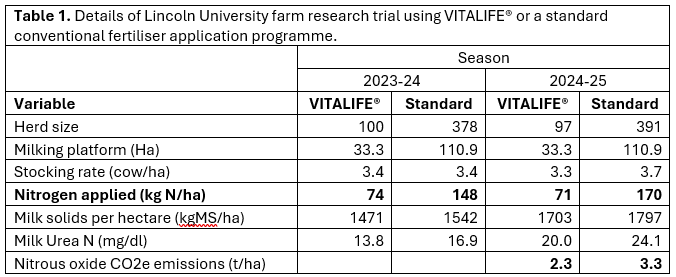
What this shows is that half the quantity of nitrogen was applied and the production was maintained close to the level of the farm receiving the conventional fertiliser regime.
This was achieved by soil
development and nutrient cycling in the soil through biological means. Figure
1 has soil test results over a period of 3 years showing increased organic
matter content and carbon levels, with a steady ratio of carbon to nitrogen.
This indicates an increase in natural nitrogen fixation and nutrient cycling
with a halved input of synthetic nitrogen as the C:N ratio was maintained.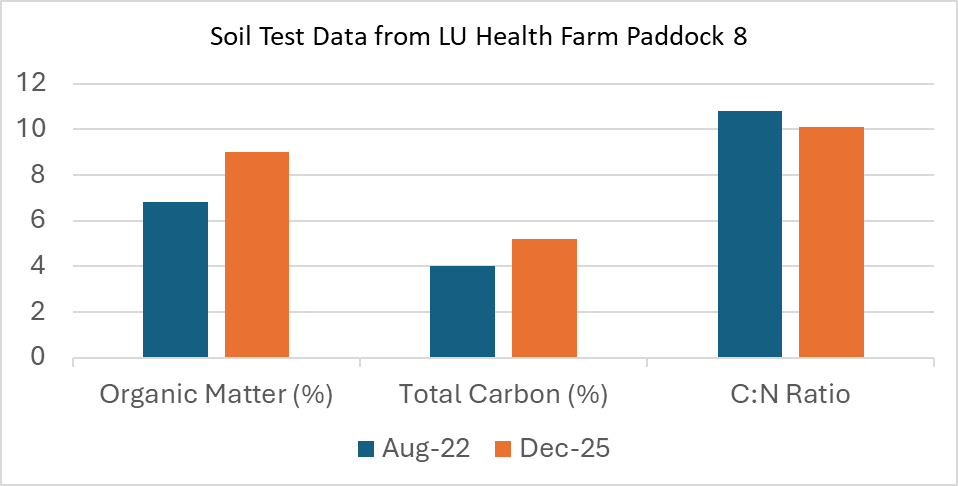
Figure 1. Soil test results from the Lincoln University Research farm with block receiving either a VITALIFE® or Conventional type fertiliser regime.
This is supported by visual soil assessments completed on the block receiving the VITALIFE® fertiliser regime. Figure 2 shows the visual assessment in the same paddock before the trial began and a couple of years in. What can be seen is an improvement in soil structure, increase in clover nodules, more earthworms, longer roots, and a higher density of roots.
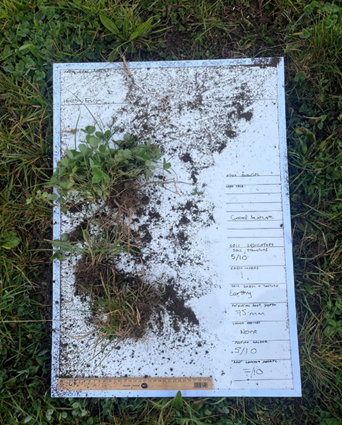
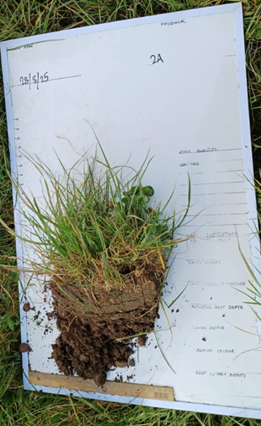
Figure 2. Visual soil assessments from paddock 2 before (left image) VITALIFE® and a couple of years (right image) into a VITALIFE® fertiliser regime.
Other benefits include the boost to soil health that makes the plant/soil environment less suitable for problematic insects. Figure 3 shows insects from a spade area on a farm a few weeks after VITALIFE® application. These grubs are succumbing to fungal attack.
It should be noted that applying VITALIFE® does not work like a chemical application. It is not a chemical knock-down, but an ecosystem builder. By building soil biology, the ecosystem is more resistant to insects and while they may be present in low numbers, they do not build to large numbers. Also, the ecosystem has ways to attack and kill the grubs. This means that over several years there is reduced grass grub pressure, less pasture pull and the pasture has stronger roots.
VITALIFE® can be applied to both pasture and effluent ponds. This will improve plant available nutrients from spread effluent and result in both a healthier effluent pond and better pasture response to effluent application.
This is not about feeding the plant directly with inputs but biologically farming and building a system that feeds itself. Changes take time with biological systems, so allow 1-3 years to see these results.
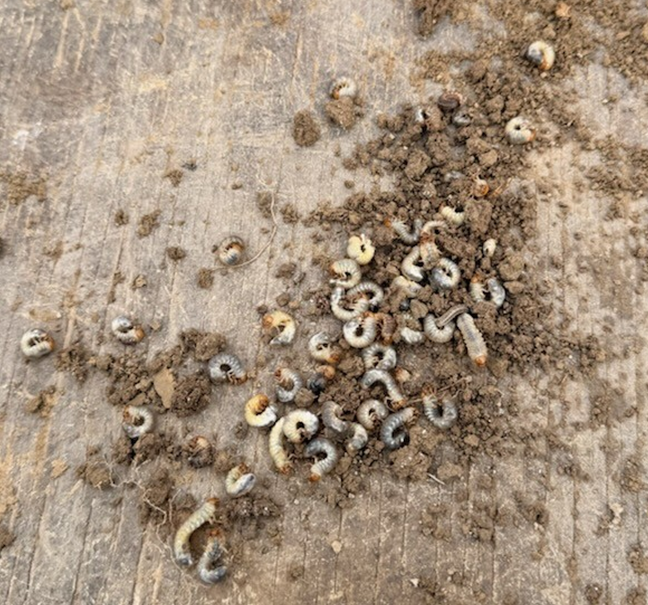
Figure 3 . Grass grub and porina looking sick from fungal attack several weeks after VITALIFE® Calcium application.
Where VITALIFE® fits in a fertiliser program
VITALIFE® is not an instant fix or a complete replacement for fertiliser. It needs to be applied as part of a fertiliser and farm management programme. Nitrogen inputs could easily be reduced (~50%) and chemical pesticide applications stopped . With increased nutrient holding capacity and nutrient cycling developing over time, fertiliser inputs can be targeted to just what is needed.
Again, let’s be clear – this is not anti-input, anti-fertiliser nor anti-chemistry! We still need them and we strongly recommend the continued use of fertiliser.
VITALIFE® is a change of approach to one that is pro-soil, pro-farmer
and pro-future farming.
VITALIFE® Calcium - Case Study Results